Minister of Higher Education:
-
Directs a set of executive measures to rationalize energy consumption in universities and institutes
-
Converting research outputs into innovations is a top priority for the Ministry
-
Full coordination between university hospitals and Ministry of Health hospitals to improve healthcare services for citizens
-
Universities’ engagement in addressing societal challenges and achieving sustainable development
-
Commends the inclusion of 21 Egyptian universities across 42 disciplines in the QS World University Rankings by Subject 2026
-
Congratulates Mansoura University on discovering a new species of early great ape ancestors, reshaping the evolutionary map
The Supreme Council of Universities Approves:
-
Launching an awareness campaign for university and institute students to promote energy conservation in society
-
The academic calendar for the 2026/2027 academic year
-
September 19: Start of the new academic year at universities and institutes
-
January 2: Beginning of first semester final exams
-
January 23: Start of mid-year vacation
-
February 6: Beginning of the second semester
-
May 20: End of the second semester
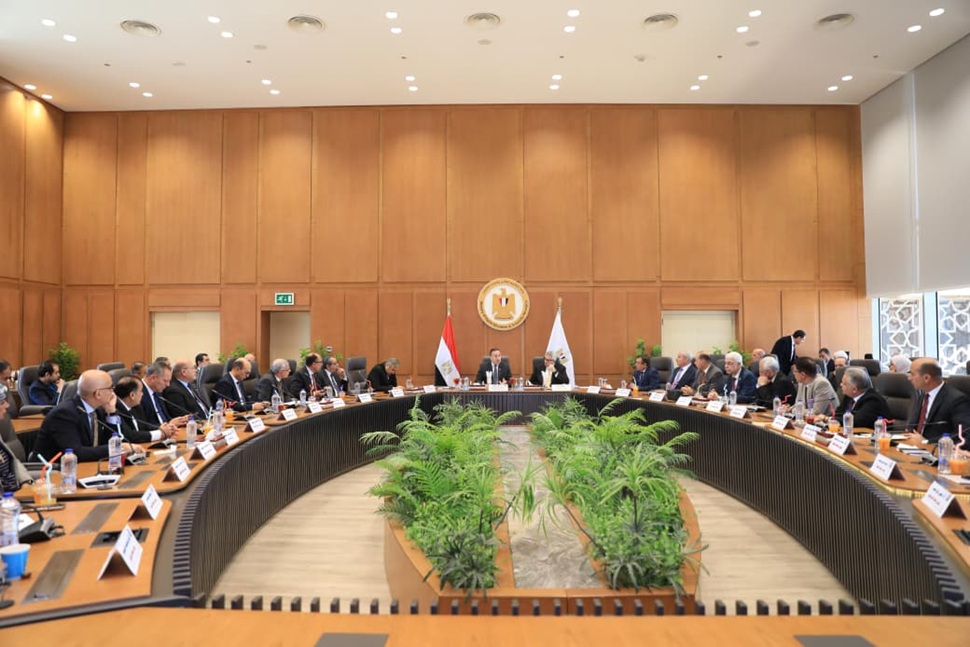
The Supreme Council of Universities held its regular meeting under the chairmanship of Dr. Abdelaziz Qansoua, Minister of Higher Education and Scientific Research, in the presence of Dr. Mostafa Refaat, Secretary of the Council, and Council members, at the Ministry’s headquarters in the New Administrative Capital.
At the beginning of the meeting, the Minister emphasized activating the role of universities and institutes in rationalizing energy consumption to address the global energy crisis. This includes several executive measures such as reducing fuel consumption in university transportation, using energy-saving lighting, expanding the use of solar energy units, and adopting regulated and efficient lighting practices in lecture halls and classrooms.
The Minister stressed the importance of research outputs that can contribute to providing scientific solutions to economic, social, health, and environmental challenges, while enhancing integration between research, education, and industry, and supporting national and developmental projects across various sectors.
He also underscored the importance of coordination and integration between university hospitals and Ministry of Health hospitals within the national healthcare system, supporting the inclusion of university hospitals in the comprehensive health insurance system and their accreditation by the General Authority for Healthcare Accreditation and Regulation.
Dr. Qansoua directed universities to actively engage in community participation and contribute to achieving sustainable development by supporting efforts across all governorates nationwide.
The Minister praised the inclusion of 21 Egyptian universities in the QS World University Rankings by Subject 2026, across 42 academic disciplines out of 55 included in the ranking, noting the increase in the number of universities listed in Computer Science, Mathematics, Chemistry, Agriculture, and Environmental Sciences. He emphasized the importance of continued support for researchers to increase international publication in prestigious scientific journals to improve the global ranking of Egyptian universities.
He also congratulated Mansoura University, led by Dr. Sherif Khater, on the success of its Vertebrate Paleontology Center team in publishing a study in the journal Science, announcing the discovery of a new species of early great ape ancestors, reshaping the evolutionary map.
The Council reviewed a report on the Ministry’s key activities during March, including a meeting between the Prime Minister, Dr. Mostafa Madbouly, and the Minister of Higher Education to review the Ministry’s vision and future work plan. This vision includes several strategic pillars: strengthening higher education partnerships, establishing foreign university branches in Egypt, internationalizing Egyptian universities, increasing international student enrollment, linking scientific research with industry and the knowledge economy, developing private, technological, and national universities, and enhancing faculty capacities and academic and administrative performance.
The report also highlighted a ministerial meeting to discuss mechanisms for implementing presidential directives to align university programs with labor market needs, including preparing a comprehensive study of labor market trends at the local, regional, and international levels.
It further noted coordination between the Ministries of Higher Education and Health to integrate university hospitals into the comprehensive health insurance system, as well as meetings with ministers of industry, education, foreign affairs, and planning to strengthen cooperation in innovation, education development, international collaboration, and investment planning.
The report also addressed meetings with UNESCO, the Fulbright Commission, international academic institutions, and foreign ambassadors to enhance academic and research cooperation, establish international university branches in Egypt, and support joint programs and technology transfer.
Additionally, the Minister held meetings to develop nursing education, enhance intellectual property awareness, and strengthen cooperation with the United Kingdom through the British Council.
The Council also reviewed a presentation on developing faculty capacity-building centers in Egyptian universities to align with modern requirements and enhance training effectiveness.
Another presentation addressed improving the documentation cycle of agreements and introducing a fast-track pathway for agreements related to academic programs.
The Council reviewed a proposal to launch an awareness campaign in universities and institutes to promote energy conservation, leveraging students’ influence in shaping responsible consumption behaviors within their families and communities.
Dr. Adel Abdel Ghaffar, Media Advisor and Official Spokesperson for the Ministry, announced that the Council approved the academic calendar for 2026/2027. The academic year will begin on Saturday, September 19, 2026. Mid-term exams for the first semester will be held during the first three weeks of November, depending on each faculty. The first semester will run for 15 weeks, ending on December 31, 2026. Final exams will begin on January 2, 2027, and conclude on January 21, 2027. The mid-year break will start on January 23 and end on February 4, 2027. The second semester will begin on February 6, 2027, with mid-term exams scheduled between late March and early April. The semester will last 15 weeks, ending on May 20, 2027, with final exams held during May and June according to each faculty’s schedule.
The spokesperson added that the Council reviewed universities’ nominations of candidates for leadership training programs in cooperation with international institutions to build leadership capacities.
The Council also followed up on efforts to develop an Enterprise Resource Planning (ERP) system to digitize administrative operations across Egyptian universities, as part of accelerating comprehensive digital transformation.